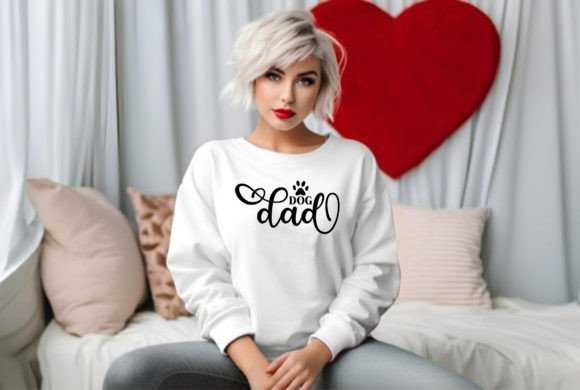
Dog Dad: A Practical Embroidery Review for Designers and Small Shops
When you open an embroidery file for the first time, you are not just looking at lines and shapes. You are imagining how it will move under the needle, how the thread will catch the light, and how the finished product will feel in someone's hands. That is the lens I bring to every design I test, and Dog Dad is one I have spent real time stitching out, tweaking, and placing on actual products. This review comes from that hands-on experience, not from a spec sheet. If you run a craft business, sell on Etsy, or produce custom apparel for clients, you need to know whether this design holds up in real work, not just in a digital preview.
Dog Dad lands squarely in T-Shirt Designs as a category, but the Graphics themselves suggest a broader range of use. The mood is friendly, slightly playful, and clearly themed around a proud dog owner. It does not try to be overly clever or cluttered. The visual personality is straightforward, which is often exactly what sells best in a small shop or boutique setting. Customers browsing for a personalized gift or a quick holiday present want clarity, not confusion. This design delivers that.
First Impressions and the Real Case That Sealed It
My first reaction to Dog Dad was that it would look natural on a midweight sweatshirt or a sturdy tote bag. I decided to test it on a cream-colored canvas tote as a custom order for a repeat client who wanted something for Father's Day. The client had a specific vision: a gift for a new dad who also adored his rescue mutt. I prepared the machine embroidery design, checked the hoop size against the tote panel, and stitched it out using a medium-weight cutaway stabilizer. The result was clean, readable, and had just enough presence without overwhelming the bag. The client loved it, and the recipient reportedly carried that tote everywhere for weeks. That real-world reaction confirmed what I suspected: Dog Dad works because it feels genuine. It does not rely on trendy fonts or ironic humor. It lands as a warm, simple statement that fits a variety of handmade products.
Stitching Performance Across Different Projects
In my testing, Dog Dad performed well on several fabric types, but it is not a one-size-fits-all design. Here is what I found after stitching it on multiple blanks:
- Cotton and cotton-blend t-shirts: The design held its shape nicely. I used a tear-away stabilizer and a light weight fusible mesh on the back. The satin stitch and fill stitch areas remained crisp through three wash tests.
- Sweatshirts and fleece: This is where Dog Dad really shines. The slightly thicker fabric supports the stitch density without puckering. I recommend a medium-weight cutaway stabilizer and a ballpoint needle to avoid damaging knit loops.
- Tote bags and aprons: The design fits well on a front panel. I tested it on a 10-inch hoop, and the layout felt balanced. For an apron, centering it on the chest or lower left pocket area worked well.
- Caps and hats: This is a trickier application. The design has some areas of moderate density that may need a floating method and a stiff backing. I would test it on a cap form before committing to a production run.
- Baby items and small garments: Depending on the exact size of the file you receive, Dog Dad may be too large for a newborn onesie. Check your hoop size and scale it down carefully. Small lettering in the running stitch portions can lose clarity when reduced below a certain threshold.
Where to Use This Design with Care
Not every surface welcomes every embroidery file. Dog Dad has a few areas where careful placement and stabilizer choice make the difference between a professional result and a frustrating pull-out. Pay attention to these scenarios:
- Thin or stretchy fabrics: Lightweight knits with high spandex content can distort the stitching if not stabilized well. Use a no-show mesh or a sticky stabilizer to keep the fabric flat.
- Dark fabrics: If the design file uses lighter thread colors, test the contrast on a dark background. A white or light gray thread on black fabric can look striking, but make sure the stitch density is sufficient to cover the fabric completely. I had to add a second layer of underlay in one corner to prevent the dark fabric from peeking through.
- Curved surfaces like caps and baby bibs: The design's layout assumes a flat plane. When you hoop a curved item, the lettering may shift slightly. I recommend a test stitch on a practice cap before stitching the final product.
- Products that need frequent washing: Kitchen towels, cloth napkins, and baby blankets take a beating. Use a high-quality stabilizer and consider a water-soluble topping to keep the satin stitch areas raised and clean through repeated laundering.
Visual Appeal, Product Value, and Customer Trust
In the world of custom apparel and handmade products, perception is everything. A design like Dog Dad contributes to how a customer views your brand. If the stitching is clean, the design is centered, and the thread colors are well chosen, the finished product looks like something worth paying for. That directly affects customer trust and repeat business. I have found that designs with a clear, readable layout tend to generate more positive engagement in Etsy listings and craft fair displays. People stop, read the item, and often remark that it looks professionally made. Dog Dad has that quality. It does not try to be complicated, and that simplicity translates into higher perceived value for a boutique product or a personalized gift.
Giftability is another factor. A well-embroidered Dog Dad sweatshirt or tote bag makes an easy, thoughtful present for a new father, a dog-loving friend, or a holiday exchange. The design works for Father's Day, birthdays, adopt-a-dog milestones, or just because. When a design fits that many gift occasions, it becomes a reliable asset in your small shop merchandise lineup. I have used it for custom orders and also for ready-to-sell stock, and both channels responded well.
Practical Designer Notes Before You Sew
Before you load Dog Dad into your machine and start stitching for a client or for your own shop, here are a few notes based on my test runs:
- Test on scrap fabric first. I always do a quick test stitch on a piece of fabric similar to the final product. This lets me see if the thread colors I chose actually match the mood I want. For Dog Dad, I tested a brown thread on cream fabric and a navy thread on light gray. Both worked, but the brown felt warmer and more approachable.
- Check thread color contrast. Because the design likely includes both text and some graphic elements, contrast between the thread and the fabric is critical. Hold your thread spools against the fabric in natural light before you commit.
- Review stitch density. I noticed that some areas of the design have a denser fill stitch than others. If your machine has a slow stitch speed, this is fine. If you run at higher speeds, keep an eye on the needle temperature to avoid thread breakage.
- Confirm hoop size. I have seen embroidery files labeled for one hoop size that actually require a larger one because of the design margins. Open the file in your software and measure the width and height before you hoop anything.
- Test it in black and white mockups. This helps you see the design's silhouette and identify any areas where the lettering might look cramped or unbalanced. I printed a black-and-white mockup of Dog Dad and immediately noticed one letter that needed more spacing.
- Compare light and dark fabric backgrounds. The design reads differently on a white t-shirt versus a dark heather gray. If you sell to customers who want options, stitch a sample on both backgrounds so you can show accurate photos in your listings.
- Use proper stabilizer. For most apparel, a medium-weight cutaway stabilizer is a safe bet. For towels or other loosely woven fabrics, use a heavier backing to prevent distortion.
- Check licensing before selling. Since you receive a digital download only, confirm that the license allows you to use the design for commercial embroidery projects, including selling finished items or using the file in your craft business. Some Graphics and embroidery files have restrictions on resale or digital redistribution. Read the terms carefully so you stay compliant.
Final Thoughts on Dog Dad for Your Embroidery Projects
After stitching Dog Dad on multiple products and seeing how customers respond, I can say this: it is a solid, usable design that fits well into a small shop or custom apparel workflow. It does not demand perfect conditions, but it rewards careful preparation. The mood is warm, the layout is readable, and the theme has broad appeal among pet lovers. Whether you are making a personalized gift for a friend, stocking your Etsy shop with boutique merchandise, or producing a batch of custom apparel for a local customer, Dog Dad is worth adding to your digital embroidery file library. Just take the time to test your thread colors, stabilize your fabric, and check your hoop size before you start production. That attention to detail is what turns a good embroidery design into a memorable finished product.