Can't Find a Thing in Here Graphics for T-Shirt Designs
Whenever I open a new graphic design asset, I immediately ask myself one question: will this actually hold up in production, or will it look great on screen and fall apart when I cut it? That question matters even more when the design has a playful, busy, or layered personality — and Can't Find a Thing in Here definitely fits that description. I have been running a small handmade business for years, selling everything from custom tumblers to seasonal sticker packs, and I know from experience that a file that looks charming in the preview can become a headache when you try to size it down for a pencil case or layer it for a vinyl t-shirt order. So when I downloaded Can't Find a Thing in Here, I put it through my full crafting workflow before I even thought about listing a finished product in my Etsy shop. Here is what I found, what it works for, and where you should be careful.
A Playful, Relatable Vibe That Sells Itself
The first thing that struck me about Can't Find a Thing in Here is how instantly relatable it feels. If you are a crafter, a small business owner, a parent, or anyone who has ever stood in the middle of a room full of supplies and muttered that exact phrase, this design speaks to you. It has a playful, slightly chaotic energy that feels honest and a little humorous. It is not trying to be elegant or minimalist — it leans into a fun, messy, creative personality. That is exactly the kind of design that sells well on products aimed at makers, teachers, studio organizers, and anyone who embraces the beautiful chaos of a creative life. I could immediately picture it on t-shirts at a craft fair, on tote bags for sewing enthusiasts, and on mugs for the "organized chaos" crowd.
Visually, the graphic design asset offers a layout that is full of detail without being unreadable. It feels like a snapshot of a busy workspace, but done in a way that translates well to both large and medium-sized products. The mood is warm, approachable, and full of personality — exactly what you want when you are trying to connect with customers who value authenticity over perfection.
Where Can't Find a Thing in Here Shines in Real Crafting
After testing this asset across several project types in my home studio, I found that it performs exceptionally well in a handful of specific applications. If you are a Cricut or Silhouette user, the SVG design handles clean cutting when you keep it at a reasonable size. I tested it on a standard t-shirt design for a local market order, and the cut lines were smooth. The same file also worked beautifully as a sublimation design for a tumbler wrap, where the detailed elements added visual interest without overwhelming the curved surface.
For printable products, Can't Find a Thing in Here is a strong choice. I used the PNG file to create gift tags for a handmade business networking event, and the design printed crisp and clear at about 3 inches wide. The colors held up well on matte paper, and the composition stayed readable even when I scaled it down for mini tags. It also worked wonderfully as a sticker design for planner lovers and desk organizers. The playful theme fits perfectly on laptop stickers, water bottles, and notebook covers. If you sell digital products in your Etsy shop, this could easily become a bestseller as a printable wall art piece for craft rooms or home studios.
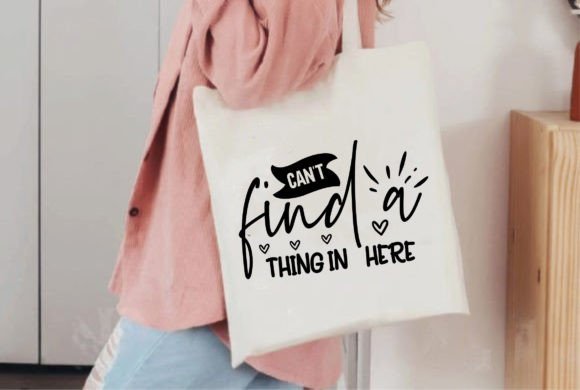
I also experimented with it as a tote bag design using iron-on vinyl. The layout has enough open space in the right areas that weeding was not a nightmare. I did a quick test on a cotton tote, and the result was a fun, conversation-starting piece that I immediately knew would sell at a craft fair. The design feels like it belongs on products for creative entrepreneurs, teachers, and anyone who spends their days making things.
Best Product Categories for This Design Asset
Through my testing, I identified several product types where Can't Find a Thing in Here really delivers. T-shirt designs are the obvious starting point. The composition works well on both adult and youth sizes, and the humorous angle makes it a great conversation starter. I would also recommend it strongly for mug designs, especially for sublimation or print-on-demand orders. Customers who buy gifts for their crafty friends will love this. Tumbler wraps are another natural fit, and the design looks sharp on both white and dark backgrounds when you adjust the color settings correctly.
Beyond drinkware and apparel, this graphic design asset works very well for home decor and stationery. Think greeting cards for creative friends, thank-you cards for handmade business orders, and art prints for studio walls. I even used a simplified version of the design as a small accent on handmade packaging — it added personality without making the box feel cluttered. If you sell party decorations or favor tags, the playful theme fits birthday gifts for makers, teacher appreciation gifts, and even small team gifts for creative workplaces.
For scrapbooking enthusiasts, the detailed illustration style provides plenty of visual interest for layout pages about creative projects, workspaces, or "behind the scenes" moments. Planner sticker makers will also find value here — the design can be broken into smaller elements for functional stickers, or kept whole as a decorative accent.
Where to Be Careful With This Design
No asset is perfect for every application, and Can't Find a Thing in Here has a few limitations that honest crafters need to know before they start cutting or printing. The biggest concern I found is with very small products. If you try to size this down to a 1-inch sticker or a tiny vinyl decal for a pencil case, the finer details can become muddled. The design has a lot of personality, and much of that comes from the layered elements. When you shrink it too aggressively, those layers lose definition. I recommend keeping the design above 2.5 inches for most applications to maintain readability.
Another area that requires caution is layered vinyl projects. If you plan to create a multi-layer t-shirt design with different colors for different elements, you will need to carefully examine the SVG lines to ensure each layer separates cleanly. I spent some time simplifying the layout for a layered project, removing a few small details that would have been difficult to weed. That extra step saved me from frustration during production. Similarly, if you are working with light-colored vinyl on a dark shirt, check that the contrast is strong enough for the smaller details to be visible from a distance. Low-contrast combinations can make the busier parts of the design look muddy.
For sublimation, always test your colors on your specific substrate before committing to a batch of products. The design prints well on polyester blends and coated surfaces, but the saturation may vary depending on your printer settings and the material you are using. I ran two test prints on different mugs before I was fully satisfied with the color balance.
Practical Crafter Notes Before You Sell
Before you use Can't Find a Thing in Here for customer orders or shop inventory, go through this quick checklist that saves me from mistakes every time. First, open the SVG file in your design software and inspect the lines at 200% zoom. Look for any jagged edges or stray points that might cause cutting issues. I found the file to be generally clean, but every crafter should verify before production. Second, preview the PNG file against both light and dark mockups to see how the design reads on different backgrounds. Third, check the resolution for sublimation. If the file is too small for your intended product, scale it up with care to avoid pixelation.
I also recommend pairing this design with a simple font if you are adding text. A clean sans serif or a straightforward handwritten font keeps the overall look balanced. Do not use an overly decorative script font alongside this design — it will compete with the illustration and create visual clutter. Instead, let the graphic design asset be the star. A bold sans serif displayed font underneath or above the artwork keeps the composition professional and readable.
Finally, confirm the commercial license terms before you sell finished products. This asset is intended for commercial use, but each creative marketplace has different rules. Make sure you understand what is allowed for print-on-demand, handmade items, and digital products in your Etsy shop. I always screenshot the license details and file them with my design assets so I have a record if questions come up later.
Why Can't Find a Thing in Here Deserves a Spot in Your Design Bundle
After working through my production checklist, I added Can't Find a Thing in Here to my active design rotation. It has the kind of personality that resonates with a broad audience of makers, crafters, small business owners, and creative professionals. It is not a generic decorative accent — it tells a story that your customers will immediately recognize. That is exactly the type of design asset that sells well at craft fairs, on Etsy, and through print-on-demand shops.
If you are looking for a graphic design asset that feels authentic, playful, and versatile across t-shirt designs, mugs, totes, stickers, and printable products, this one is worth your time. Just remember to test it at your intended sizes, simplify it for layered projects if needed, and pair it with clean fonts for maximum impact. Used the right way, Can't Find a Thing in Here can become a consistent seller in your handmade business collection.